The Science
Light and the Circadian Rhythm.
Light & Your Body
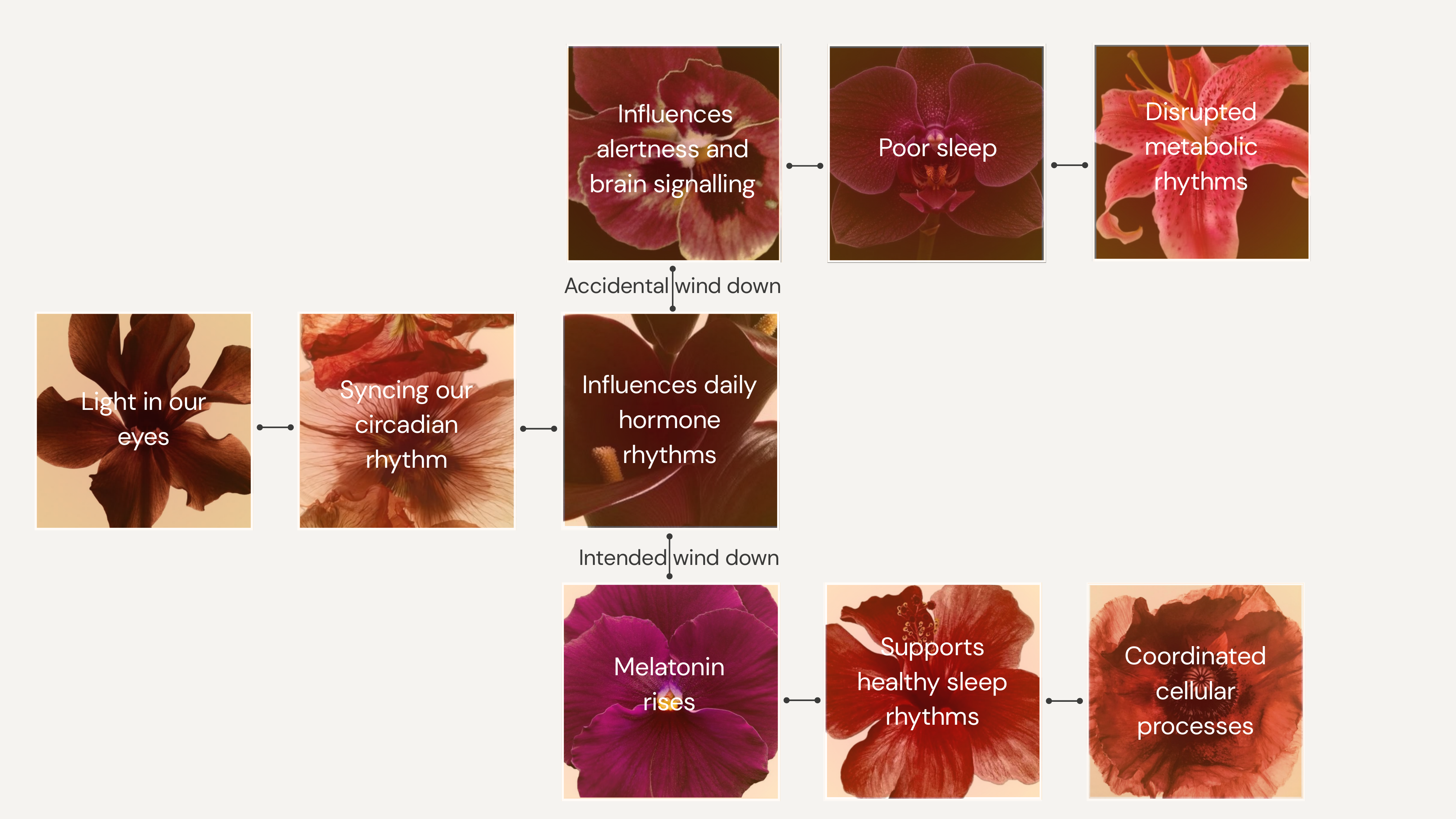
Light entering your eyes helps regulate your circadian rhythm (body clock), influencing far more of your biology than you might think. Different wavelengths of light have different effects: blue-rich light can promote alertness, while dimmer, warmer light in the evening helps support the natural transition towards melatonin production.
Sleep Rhythm
What may seem insignificant to you can mean something very different to your brain and body. We evolved with a finely tuned light-signalling system that helps regulate our internal clock and sleep. Circadian rhythms also help coordinate biological processes involved in cellular maintenance, including collagen production, protein synthesis and autophagy.
Artificial Light
The blue-rich light emitted by our screens can influence our natural alertness rhythms, particularly with prolonged exposure or use late into the evening. This is why choosing a lens designed to filter specific wavelengths of light can be useful when screen time is unavoidable. The right lens depends on its light-filtering properties and when you wear it.